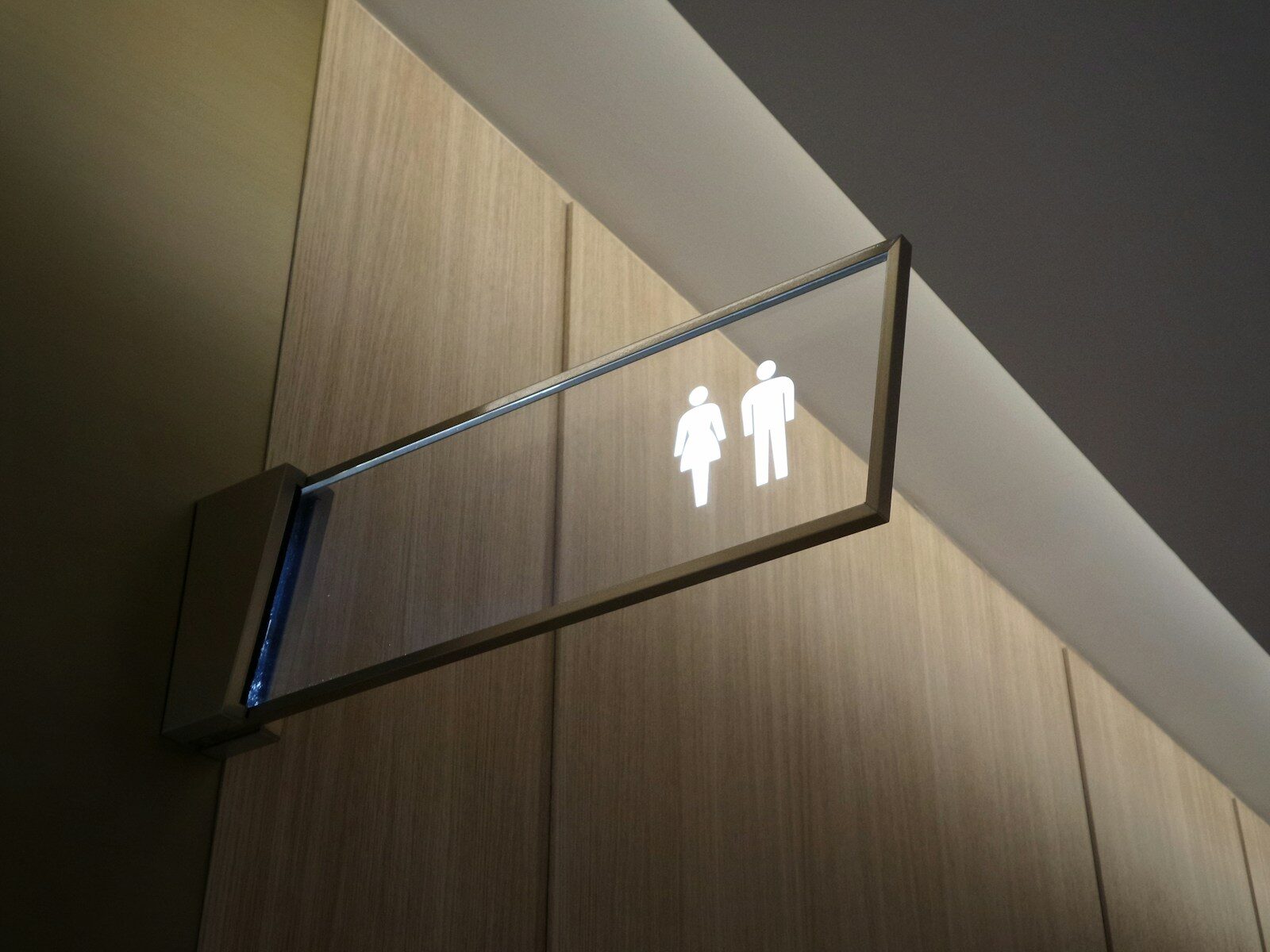
Few everyday places are as oddly stressful as a public toilet. Not because of the queue, or the taps that never settle on a temperature, but because of the noise. A slammed door, an industrial flush, a hand dryer that sounds like a motorbike starting indoors, it all adds up. For some people it’s just unpleasant. For others, especially those with sensory sensitivities, it’s enough to make them avoid the space altogether.
Acoustics rarely come up in discussions about public design, yet they shape how welcoming a place feels. Cafés spend money softening echoes. Libraries understand the value of hush. But loos are often treated as purely functional, with little thought given to how sound bounces off tile, metal and hard ceilings. The result is a room that turns every mechanical noise into something harsher than it needs to be.
That is partly why small design choices matter more than they seem. Cubicle locks that don’t clatter, bins with softer-close lids, and quiet hand dryers can all reduce the sense of chaos. None of this is glamorous, but it does make public spaces feel more considerate. A calmer washroom is not simply a nicer one. It’s often more usable for children, older people and anyone who finds sudden noise overwhelming.
The overlooked side of accessibility
When people talk about accessible design, they usually mean ramps, rails and door widths. Fair enough. But comfort is part of accessibility too, and sound plays a role.
- Less noise can reduce anxiety in enclosed spaces.
- It can stop busy venues feeling even more frantic.
- It shows care for how spaces are actually experienced.
Public conveniences may never be tranquil, and nobody expects them to be. Still, there is a difference between ordinary background noise and a room that feels like an assault on the ears. If public spaces are going to work better, the humble washroom is a good place to start.
Photo by Franck V.